

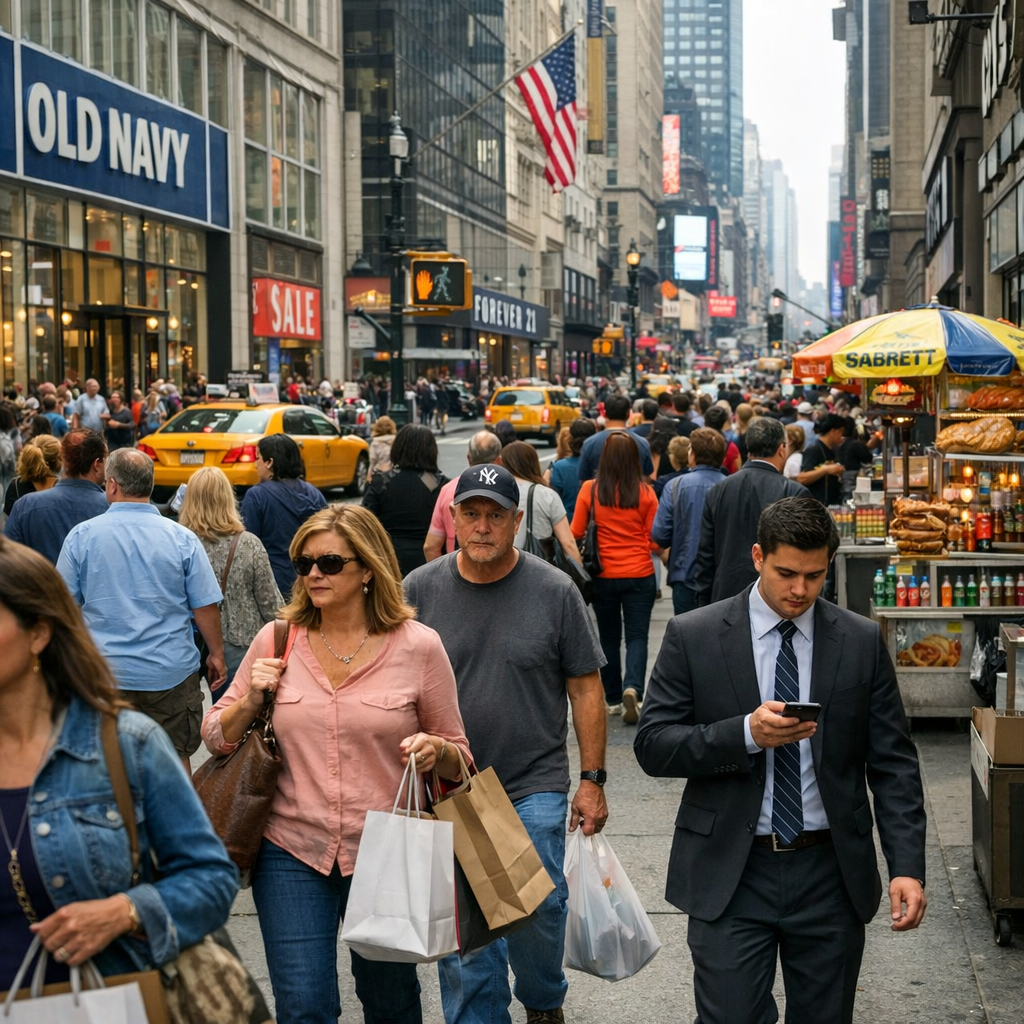
The U.S. economy is currently experiencing a period of moderate growth. According to the International Monetary Fund (IMF), the gross domestic product (GDP) is projected to grow by 2.4% in the fourth quarter of 2026, an increase from 2.2% in the previous year. This growth is accompanied by a decrease in the unemployment rate, which is expected to drop from 4.5% in late 2025 to 4.1% in 2026.
Inflation remains a concern, with the Federal Reserve aiming to bring it down to its 2% target by 2027. The Federal Reserve has maintained its benchmark interest rate at 3.6%, with potential for a slight decrease to 3.4% if the job market shows signs of weakening.
Despite these positive indicators, challenges persist. A Gallup poll indicates that about one-third of Americans view politics and government as the nation’s most pressing issues, reflecting concerns about political stability and economic mobility. This anxiety is particularly pronounced among older Americans, while younger generations are more focused on economic challenges such as housing affordability.
In summary, while the U.S. economy shows signs of resilience and growth, underlying concerns about political stability and economic challenges continue to influence public sentiment.